- Free Standard Delivery Over £45
- UK Registered Pharmacy
- Discreet Delivery
- Authentic & Safe Medication
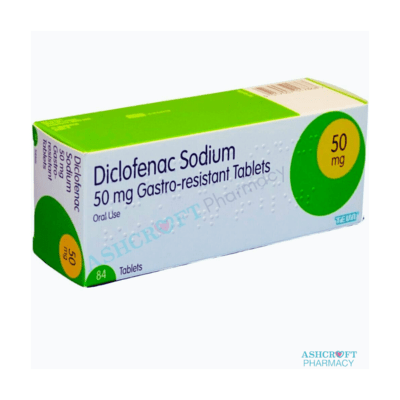
Images are for illustration purposes only.
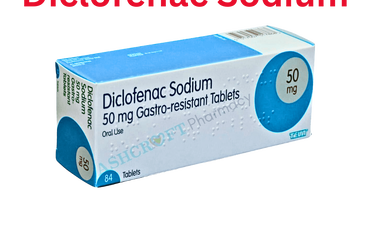
Diclofenac Sodium Tablets
In Stock
Thursday, 02 Jul 2026
Medication features
Diclofenac Sodium Tablets are NSAIDs used to reduce pain, inflammation, and swelling. It comes in gastro-resistant forms to prevent stomach irritation by releasing the drug in the intestines. It typically starts working within 1 to 2 hours, with peak effects in 3 to 4 hours, and is often taken with food to reduce gastrointestinal discomfort. Full effectiveness may take a few days.
- Relieves pain
- Reduces swelling and inflammation
- Eases joint stiffness

Overview
NOTE: After selecting this product, you will need to complete a short assessment, so we can make sure this medication is suitable for you.
Diclofenac Sodium Tablets for Pain Relief in the UK
When referred to as Diclofenac Sodium Tablets, it means the drug is in a sodium salt form, which is the common way it's formulated for oral (tablet form) use. The sodium salt form helps with absorption and effectiveness.
If you want to buy Diclofenac online, you will need to complete the short assessment, so one of our accredited medical prescribers can confirm the treatment is suitable for you.
Diclofenac is a generic drug (Non-branded medication) and comes in two salt versions called Diclofenac potassium and Diclofenac sodium. It is also available in the form of:- Enteric-coated tablet.
- Capsule and tablet.
- Extended-release tablet and capsule.
- Solution for injection.
- Eye drops.
- Suppository.
- Gel.
Diclofenac is a non-steroidal anti-inflammatory drug (NSAID) used to reduce pain, inflammation, and swelling. In the UK, Diclofenac Tablets are prescription-only, while diclofenac gels and some topical products may be available without a prescription.
It is used to manage symptoms of arthritis, including rheumatoid arthritis and osteoarthritis, as well as gout and ankylosing spondylitis, which is inflammation of the spine.Depending on your symptoms, Diclofenac Sodium Tablets may also be prescribed for short-term painful inflammatory conditions, including period pain, where clinically appropriate.
Diclofenac sodium is also available in the form of plasters and gels to alleviate joint pain. In medical settings, particularly in hospitals, it can be administered as eye drops or injections.
High-strength diclofenac gel (3%) is a separate topical treatment used for actinic keratoses and is not the same as Diclofenac Tablets.
Most Common Uses of Diclofenac Tablets
- Arthritis: Helps manage symptoms of osteoarthritis and rheumatoid arthritis, including inflammation, swelling, stiffness, and joint pain.
- Pain relief: For mild to moderate pain, such as headaches, toothaches, and muscle aches.
- Period Pains: Can alleviate pain associated with menstrual cramps.
Diclofenac Tablets are a nonsteroidal anti-inflammatory drug (NSAID) commonly prescribed to relieve various pain conditions. It effectively reduces pain, swelling, and inflammation, making it useful for managing several types of ailments.
Diclofenac Tablets Are Used to Treat:
- Mild to moderate pain (headaches, toothaches, muscle aches).
- Swelling.
- Inflammation.
- Arthritis, including osteoarthritis and rheumatoid arthritis.
- Joint stiffness.
- Ankylosing spondylitis (arthritis affecting the spine).
- Menstrual cramps (Dysmenorrhoea).
- Migraine headaches.
- Back pain.
- Gout.
- Toothache.
- Strains and sprains in ligaments or muscles.
However, you must consult your doctor before taking Diclofenac and take it according to your doctor’s recommendation.
How Do Diclofenac Tablets Work for Pain Relief?
Diclofenac Sodium Tablets are a non-steroidal anti-inflammatory drug (NSAID) that possesses antipyretic effects and analgesic properties.
The drug works by blocking the production of substances called prostaglandins. These substances are involved in causing inflammation, pain, and fever. By reducing prostaglandin levels, diclofenac helps to alleviate these symptoms.
Diclofenac Potassium Tablet
Diclofenac Potassium is one of the salt forms of diclofenac, similar to Diclofenac Sodium. It is used to treat pain and inflammation, just like Diclofenac Sodium, but it may be absorbed into the bloodstream more quickly.
This faster absorption can make Diclofenac Potassium particularly useful for fast relief of acute pain conditions.
Diclofenac Potassium is typically available in immediate-release tablet form, which provides quicker pain relief compared to extended-release formulations. It is used for conditions such as:
- Acute pain: Fast relief for sudden-onset pain.
- Period pain: Provides rapid relief from menstrual pain.
- Migraine: Can be used to alleviate migraine attacks.
Like other forms of diclofenac, Diclofenac Potassium is effective for treating conditions involving pain and inflammation, but its quicker action can be beneficial for managing more immediate pain.
Your prescriber will advise whether Diclofenac Sodium tablets or Diclofenac Potassium tablets are the most suitable option for you.
Directions
How to Take Diclofenac?
You must take Diclofenac Tablets according to your doctor’s or pharmacist’s recommendations.
Below is guidance on how to take different forms of Diclofenac medication:
Tablets and Capsules
Swallow a whole Diclofenac tablet or capsule with a glass of water after a meal or snack. You can also take it with food, antacids, or milk to avoid stomach irritation.
Note: Do not chew, break, or crush your Diclofenac tablets or capsules.
Suppositories
If you want to take Diclofenac suppositories, take them in such a way that:
- Wash your hands and clean your anus with water and mild soap. Let it dry.
- Unwrap your suppository and gently push it into your anus with the pointed end first. It must go 3 cm or 1 inch into your anus.
- Lie or sit for 15 minutes so that the suppository melts inside your anus.
After this, wash your hands again.
Consult your product information leaflet (PIL) in the medication box for a step-by-step guide and/ or ask your pharmacist or doctor for clarification.
Diclofenac Gel
For the administration of Diclofenac gel:
- Gently squeeze the gel tube and get a small amount of gel.
- Apply gel on the swollen or painful skin area, and rub it slowly.
- You will get a cooling sensation.
- After application, wash your hands properly.
- Diclofenac Patches and Plasters.
If you want to use Diclofenac plasters or patches, use them in such a way that:
- Stick a Diclofenac patch or plaster on your affected area by applying gentle pressure with the palm of your hand.
- Use it twice a day (unless your product label says otherwise).
- Before putting on the new one, moisten the area with some water, remove the old one, and wash the affected area to avoid skin irritation or rash.
Dosage
Diclofenac Sodium Tablets Dosage Guidance
Diclofenac Tablets dosage: What Is the Strongest Strength of Diclofenac?
Ashcroft Pharmacy prescribes Diclofenac Sodium Tablets. Other Diclofenac tablet types may be available in different strengths and release formats, depending on the product.
You can use Diclofenac gel 2-4 times a day, depending on its strength. If you are using it two times a day, apply it once in the morning and once in the evening. If you are applying gel 3-4 times a day, use it after every 4 hours.
Diclofenac is also available in the form of gel, plasters, and patches. Always follow the directions on the pack and do not use more than recommended.
However, never use Diclofenac gel more than 4 times a day.
If you are using Diclofenac patches or plasters, never use more than two plasters or patches a day, and always treat one painful area at a time to avoid any side effects.
Besides these forms and strengths, the exact dosage of Diclofenac depends on your age, the severity and type of the condition you want to treat, other health conditions, and the form of Diclofenac you are taking. So always take Diclofenac according to your prescriber’s advice.
Warnings
Who Should Not Take Diclofenac Tablets?
So, who shouldn't take diclofenac sodium tablets? Diclofenac is not suitable for you if you:
- Have an allergy to Diclofenac, Aspirin, Naproxen, Ibuprofen, other NSAIDs, or any other drugs.
- Are pregnant, breastfeeding, or planning to be.
- Have blood clotting disorder, lupus, high blood pressure (hypertension), kidney problems, liver disease, heart disease, or stomach ulcers.
- Get side effects after taking NSAIDs, such as asthma, runny nose, wheezing, rash, or swelling on the skin (angioedema).
- Smoke or have anaemia, ulcerative colitis, oedema (fluid retention), dehydration, blood disorder (porphyria), or Crohn’s disease.
FAQ
Who Can Take Diclofenac Sodium Tablets?
Diclofenac is a versatile NSAID (non-steroidal anti-inflammatory drug) used for pain relief and reducing inflammation. It is generally prescribed for adults, and suitability depends on your medical history and any medicines you take.
For full instructions, please refer to the Diclofenac patient leaflet that will be provided with your order.Is Diclofenac Stronger than Ibuprofen?
Diclofenac can be more effective than ibuprofen for some types of inflammatory pain, but “stronger” depends on the dose and the individual. Diclofenac Tablets can also cause side effects, so use them exactly as prescribed.
How Long Does It Take for Diclofenac to Work?
How long does diclofenac take to work? Diclofenac Tablets may start to relieve pain within 30 minutes to 2 hours, depending on the formulation. However, full pain relief will take several days, especially in chronic pain.
How Long Does Diclofenac Stay In Your System?
Diclofenac usually starts working within 1–2 hours, with peak effects in 3–4 hours. Most of the drug is cleared from the body within about 24 hours, but its pain-relieving and anti-inflammatory effects may last longer depending on the formulation and dose.
Diclofenac or Naproxen: Which Is Stronger?
Diclofenac and Naproxen are both effective NSAIDs, and the best option depends on your condition, dose, and risk factors. Their effectiveness and strength vary from person to person, depending on different conditions.
Is Diclofenac a Muscle Relaxer?
Diclofenac is not a muscle relaxer, but a nonsteroidal anti-inflammatory drug. It is an MHRA-approved drug that is used to reduce pain and inflammation. If you have muscle pain, speak to a clinician so the cause can be assessed and the right treatment chosen.
Can I Take Diclofenac and Ibuprofen Together
Diclofenac and ibuprofen are nonsteroidal anti-inflammatory drugs. You must not take both drugs at a time as they can cause serious side effects such as kidney damage or gastrointestinal bleeding.
How Many 50 mg Diclofenac Can I Take?
Only take the dose you have been prescribed. Many people are prescribed up to a total of 150 mg per day in divided doses, but your prescription label is the safest guide. Do not increase your dose yourself if symptoms persist.
How Long After Taking Naproxen Can I Take Diclofenac?
Naproxen and Diclofenac are nonsteroidal anti-inflammatory drugs (NSAIDs). It is not advisable to use Nnaproxen with Diclofenac as it can cause serious side effects.
Can Diclofenac Cause Heart Attacks?
If you use Diclofenac for a long time or already have a heart problem, Diclofenac may increase your risk of a heart attack or stroke. So before taking Diclofenac, tell your doctor about your health condition and take Diclofenac according to your doctor’s recommendation.
Can Diclofenac Damage Kidneys?
If you use Diclofenac Tablets long-term, it can increase the risk of kidney problems, especially if you already have kidney disease or you are dehydrated. So, consult your prescriber before taking Diclofenac.
Is Diclofenac Addictive?
Diclofenac is not an addictive drug. However, you must take it according to your prescriber’s recommended dose, as high doses will cause serious side effects. If you want to stop taking Diclofenac, speak to our prescribing team, particularly if you are using it for an ongoing condition.
Can you Buy Diclofenac Tablets over The Counter?
Diclofenac Tablets are prescription-only in the UK. If you want to buy Diclofenac, you can complete the online assessment and, if approved, your treatment can be supplied by our UK-registered pharmacy. Some diclofenac gels and topical products may be available without a prescription.
Side Effects
Diclofenac side effects
Diclofenac causes some common and serious side effects. If you get any of the unwanted effects, consult your doctor immediately. Let’s have a look at these side effects.
Common side effects
Some side effects of Diclofenac tablets, capsules, or suppositories happen in 1 in 100 people. They include:
- Nausea
- Upset stomach
- Heartburn
- Constipation
- Diarrhea
- Gas
- Drowsiness
- Headache
- Dizziness or vertigo
- Stomach ulcers
- Blurred vision
- Weight loss
- Mild rash
- Loss of appetite
Overuse of Diclofenac plasters or gel may cause:
- Itchiness, dryness, or irritation (eczema)
- Inflammation (dermatitis)
- Skin rash
- increase sensitivity to sunlight than normal
These side effects are mild and can settle with time. If these side effects become worse, talk to your doctor.
Serious side effects
Serious side effects from diclofenac are rare, but if you experience any, you should seek medical advice immediately. They include:
- Hearing changes or ringing in the ears
- High blood pressure
- Mental or mood changes
- Difficult or painful swallowing
- Easy bleeding or bruising
- Signs of kidney problems, including bloody/pink urine or a change in the amount of urine
- Liver disease
- Symptoms of heart failure, including tiredness, sudden weight gain, or swelling of ankles/feet
- Severe allergic reaction (anaphylaxis)
- Difficult breathing
- Runny nose
- Symptoms of asthma
- Skin rash, itching, or blistering
- Bloody stool
- Cloudy, bloody, or painful urination
Bloody vomiting - Heartburn or fast heart rate
- Weakness on one side of your body
If you experience any of these effects, seek emergency help.
Delivery
Once your order has been approved by our UK medical team it will be dispatched via Royal mail. All orders are sent using a tracked and signed for service.
Royal Mail 48 (2-5 days) | £2.49
Estimated delivery within 2-3 working days. Excludes bank holidays. Not a guaranteed service.
Free standard delivery on orders over £45.
Royal Mail 24 (1-2 days) | £2.95
Estimated delivery within 1 working day. Excludes bank holidays. Not a guaranteed service.
Royal Mail Special Delivery Guaranteed by 1pm | £6.99
Order by the 2:00 PM weekday cut-off time for guaranteed delivery by 1:00 PM the next business day.
Orders placed after the cut-off on Friday will be delivered on Tuesday.
Hear from our customers...
Loading reviews...
Related Articles
- 22nd December 2025
Diclofenac Sodium - Uses, Side Effects, and More - Ashcroft Pharmacy
Read Article




Ibuprofen 400mg Tablets
Nurofen Plus
| Medication | Ashcroft Pharmacy |
|---|---|
| Nurofen Plus 32 Tablets | £14.99
Order now |
Paracetamol 500mg Tablets
Voltarol Max Strength Pain Relief 2.32% Gel
Naproxen Gastro-Resistant Tablets (250mg & 500mg)
Naproxen Tablets (250mg & 500mg)
Solpadeine Max
| Medication | Ashcroft Pharmacy |
|---|---|
| 1 x24 Tablets | £12.49
Order now |
Written and reviewed by our qualified team

Authored by:
Mr Suhail Jamil
Superintendent Pharmacist
GPhC Number: 2069518
Receive Tomorrow if you place order in next