Retatrutide (Triple G) Weight Loss: UK Availability & Fake Product Warnings
By Mr Suhail Jamil



Key Takeaways
- What is Retatrutide? It is a highly promising, "triple-hormone" receptor agonist (GLP-1, GIP, and glucagon, also known as Triple G) currently in development by Eli Lilly.
- In clinical trials, it is being taken as a once-weekly, subcutaneous injection.
- How Effective Is It? Phase 2 clinical trials have shown "stunning" results, with participants on the highest dose losing an average of 24.2% of their body weight over 48 weeks.
- Is It Available in the UK? No. Retatrutide is still in Phase 3 trials and has not been licensed or approved by the UK's MHRA or any other regulatory agency. Legal availability is still likely years away.
The Biggest Risk: Any website or social media account (on TikTok, WhatsApp, etc.) claiming to sell Retatrutide is offering an illegal, unlicensed, or counterfeit product. The MHRA has warned that taking these unverified injections poses serious, life-threatening health risks.
In recent years, the conversation around weight-loss medications has expanded rapidly. From drugs like Semaglutide and Tirzepatide to lifestyle and dietary programmes, many people in the UK are looking for new ways to support weight management. One of the most highly speculated upon new medicines is Retatrutide, an investigational medicine that has produced thrilling preliminary trial results — but one that is still not approved for patients to use in the UK (or anywhere else) and already being targeted by counterfeiters.
In this blog, we will discuss:
- What Retatrutide is and how it works
- What the clinical trial data indicate so far
- How Does Retatrutide Compare to Mounjaro and Wegovy?
- Where we are with regulatory approval (UK/Europe)
- The increasing issue of counterfeit or unlicensed copies being purchased online
What is Retatrutide and how does it work?
Retatrutide (also referred to by its development name LY-3437943) is a new injectable drug being developed by the drug maker Eli Lilly and Company for obesity (with or without type 2 diabetes) and possibly associated metabolic diseases. PubMed
Its mode of action is especially intriguing: whereas many current weight-loss medications focus on a single hormone, Retatrutide works on three hormone receptors. More specifically, it is an agonist at the GLP-1 (glucagon-like peptide-1) receptor, the GIP (glucose-dependent insulinotropic polypeptide) receptor, and the glucagon receptor. New England Journal of Medicine
By working on these three mechanisms, GLP-1 (Glucagon-like peptide-1) Suppresses appetite, increases satiety, and slows gastric emptying.
- GIP - Enhances insulin secretion.
- Glucagon: Increases energy expenditure and promotes fat metabolism.
- GLP-1: Suppresses appetite, increases satiety, and slows gastric emptying.
Clinical Impact:
The hope is that Retatrutide will decrease hunger, enhance feelings of satiation, delay digestion, decrease the liver's production of sugar, and boost expenditure of energy.
Thus, from a mechanistic perspective, it is a next-generation solution beyond existing GLP-1-only and dual-hormone agonists.
Though Retatrutide remains investigational, there are publicly available data (Phase 2) that are extremely encouraging. In a double-blind, randomised, placebo-controlled 48-week study of 338 adults with obesity (or overweight with a weight-related condition), the body weight percentage change had stunningly disparate results. PubMed
The following are some of the most important results:
- At 24 weeks, subjects in the highest dose group lost ~17.5 % of initial body weight compared to ~1.6 % with placebo. PubMed
- At 48 weeks: highest dose group lost ~24.2 % of body weight; the placebo group ~2.1 %. New England Journal of Medicine.
- For instance, in the 8 mg and 12 mg dose groups, 100 % of the participants attained ≥5 % weight loss; up to 83 % of the participants in the 12 mg group attained ≥15 % weight loss. PubMed
These percentages, if replicated and maintained in more extended-term Phase 3 trials (and approved), may be a step-change in pharmacotherapy for weight loss. (To put this into perspective, most currently approved weight-loss drugs produce at best 15-20 % losses in many patients.)
However — and this is important — these are trial results in a controlled setting, for selected patients, under medical supervision. Safety, long-term outcomes, effect in real-world diverse populations, and regulatory assessment are still pending.
How Does Retatrutide Compare to Mounjaro and Wegovy?
While all are GLP-1-based medicines, Retatrutide's "triple-hormone" mechanism appears more potent in early trials.

- Retatrutide (Experimental): Showed ~24.2% average weight loss at 48 weeks in Phase 2 trials.
- Mounjaro (Tirzepatide): A dual-agonist (GIP/GLP-1) that showed ~22.5% average weight loss at 72 weeks.
- Wegovy (Semaglutide): A single-agonist (GLP-1) that showed ~15-17% average weight loss at 68 weeks.
This data suggests Retatrutide may be the most effective of the three, but it is also the furthest from regulatory approval.
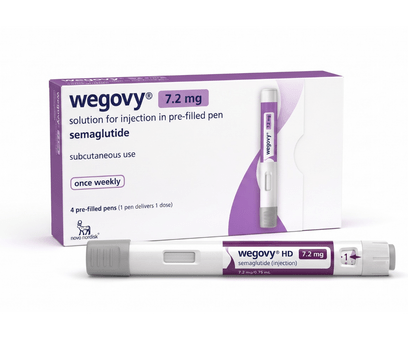
Wegovy Weight Loss Injection Pen
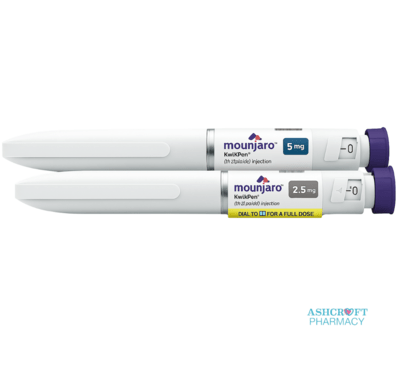
Mounjaro Weight Loss Injections

Order Monday to Friday before 14:00pm to guarantee next day delivery
When Might Retatrutide Be Available in the UK/Europe?
As much as the encouraging data, Retatrutide is not yet licensed for widespread use anywhere in the world to date. The developer and regulatory agencies report it is still in larger Phase 3 trials and still needs to fulfill the regulatory approval process (e.g. through the European Medicines Agency (EMA) and the UK's Medicines and Healthcare products Regulatory Agency (MHRA)). For UK/European availability, in the best case with successful trials and regulator review, the earliest realistic timescale remains a few years.
To be clear, there is currently no confirmed date for when Retatrutide will be available to the UK public. It's still being evaluated in large Phase III clinical trials, and UK regulations require these studies to finish and the results to be approved before it can be prescribed.
Which is to say, UK residents wanting weight-loss treatment currently: you cannot legally get Retatrutide from a proper pharmacy, NHS clinic or on prescription. Any assertion to provide it now for general purposes should be viewed with scepticism.
What about the Retatrutide cost?
Since Retatrutide hasn't completed trials or gained approval, its official price is unknown. Industry watchers often estimate potential costs based on competitors. For context, here at Ashcroft Pharmacy, Wegovy® currently starts from £119.99 and Mounjaro® starts from £149.99 per month. If and when Retatrutide reaches the market, its price could be comparable, but this remains just an educated guess for now.
The biggest risk — counterfeit/unlicensed drugs and the black market
Here is the bit of most concern for UK patients: as Retatrutide is not yet licensed, evidence is mounting of a black-market supply of unlicensed or fake weight-loss injections available online, reputed to be Retatrutide or other drugs at the cutting edge. In the UK, it is a public-health problem.
For instance:
The Guardian (UK) article uncovered that TikTok and WhatsApp influencers were selling Retatrutide through WhatsApp/Telegram groups, providing "research-chemical" formulations and connecting buyers with sellers. They often delivered packages with no medical screening and were poorly labelled. The company explained: "Any product misrepresenting itself as a Lilly investigational product can put patients at risk of potentially serious health consequences."
BMJ article highlighted that counterfeit copies of unapproved weight-loss medicines such as Retatrutide are being distributed.
The Independent newspaper reported that a reality-TV celebrity purchased what was alleged to be Retatrutide from TikTok/WhatsApp, subsequently suffering from severe side effects such as vomiting and loss of vision — according to her, she "thought she was going to die". The article highlighted that the product was unlicensed, purchased outside of medical control, and there were no instructions or checks given.
Why is this particularly dangerous?
- The product could be counterfeit, with no known substances, inactive drug, another drug, or contaminated.
- Injecting with such a product without medical testing is such that underlying health issues could not be determined (e.g., risk of pancreatitis, gall-bladder problems, thyroid disease, kidney/liver disease).
- Dose could be incorrect, storage and sterility could be interrupted (many injectable drugs need cold chain, sterile preparation).
- There is no regulation involved, and therefore adverse events may not be documented or dealt with.
- In the UK, selling or marketing unlicensed medicines for use on humans is illegal under the Human Medicines Regulations 2012. MHRA has warned of "serious health consequences" of use of un-verified injections.
In brief: every person who buys what they think is Retatrutide from an illegal website counts on taking a gamble with their health — hence breaking the law as well.
Final Thoughts
At Ashcroft Pharmacy, our priority is your safety. While Retatrutide is a highly promising breakthrough, it is not legally available in the UK, and any attempt to buy it online is extremely dangerous.
For those seeking help today, we provide advice and access to all fully-approved, MHRA-regulated weight-loss treatments. Our UK clinicians can help you find a safe and appropriate option.
Mounjaro Weight Loss Injections
Wegovy Weight Loss Injection Pen
Order Monday to Friday before 14:00pm to guarantee next day delivery
Resources
Clinical Research:
- Jastreboff, A. M., Kaplan, L. M., Frías, J. P., Wu, Q., Du, Y., Gurbuz, S., Coskun, T., Haupt, A., Milicevic, Z., & Hartman, M. L. (2023). Triple–Hormone-Receptor Agonist Retatrutide for Obesity — A Phase 2 Trial. New England Journal of Medicine, 389(6), 514–526. https://www.nejm.org/doi/full/10.1056/NEJMoa2301972
- Bowie, K. (2025). Weight-loss jabs: Eli Lilly cracks down on fake drugs being sold on TikTok and Facebook. BMJ, 391, r2202. https://www.bmj.com/content/391/bmj.r2202/related
Industry / Pharma Updates:
- Eli Lilly and Company. (2025, May 11). Lilly’s Zepbound® (tirzepatide) superior to Wegovy® (semaglutide) in head-to-head trial showing an average weight loss of 20.2% vs. 13.7%. Eli Lilly. https://investor.lilly.com/news-releases/news-release-details/lillys-zepboundr-tirzepatide-superior-wegovyr-semaglutide-head
- Rheumatology Advisor. (2025, January 10). REDEFINE 1 Trial: Superior Weight Loss Seen With CagriSema. https://www.rheumatologyadvisor.com/news/redefine-1-trial-superior-weight-loss-seen-with-cagrisema/
- Prime Therapeutics. (2025, August). GLP-1 Pipeline Update: August 2025. https://www.primetherapeutics.com/glp-1-pipeline-update-august-2025
Official Health Guidance:
- https://www.nhs.uk/conditions/type-2-diabetes/
- Where is the best place to buy the cheapest Wegovy in the UK? [Registered Online Pharmacy]. Ashcroft Pharmacy. 2025 may 1.
- Mounjaro UK Price Guide 2025: Where is the best place to buy the cheapest Mounjaro in the UK? [Registered Online Pharmacy]. Ashcroft Pharmacy. 2025 oct 2.
- Switching from Mounjaro to Wegovy | Is it safe? [Registered Online Pharmacy]. Ashcroft Pharmacy. 2025 aug 17.
- MHRA. (2025). MHRA warns of unsafe fake weight loss pens. https://www.gov.uk/government/news/mhra-warns-of-unsafe-fake-weight-loss-pens