Ventolin Inhalers: Types, Uses, Dosage & Side Effects
By Mr Suhail Jamil



If you or someone close to you has asthma or another breathing condition, you have probably heard of Ventolin (active ingredient: Salbutamol). It is one of the most commonly prescribed inhalers in the UK because of its quick relief during asthma attacks and breathing emergencies.
This blog will explain the basics: what Ventolin inhalers are, the types you may encounter, proper use instructions, dosage guidelines, and potential side effects. This guide is designed to help you better manage your condition, whether you are newly diagnosed or seeking a refresher.
Key facts.
- It is safe to use Ventolin inhalers during pregnancy and when breastfeeding (consult your doctor first).
- Ventolin inhalers provide quick relief from breathing difficulties, hence the name 'reliever' inhaler.
- The use of Ventolin inhalers has minimal side effects if used according to the doctor's instructions.
What is a Ventolin Inhaler?
A Ventolin inhaler is a reliever inhaler containing salbutamol, a fast-acting medicine used to treat breathing difficulties. Salbutamol is a short-acting beta-2 agonist (SABA) that relaxes the muscles of the airways almost instantly, enabling the lungs to open —a process called bronchodilation.
In the UK, Ventolin is widely prescribed for people with asthma, bronchospasm, or reversible airway obstruction.
It relieves sudden symptoms, including wheezing, a tight chest, and shortness of breath. It is also called a rescue medication because it acts fast during episodes of bronchospasm, offering quick relief for symptoms.
It can also be used preventively before activities known to trigger asthma, such as exercise or unavoidable allergen exposure.
Types of Ventolin Inhalers
Ventolin Accuhaler and Ventolin Evohaler are both inhalers that deliver the active ingredient, Salbutamol. However, they have different mechanisms of action and are suitable for other patients.
Ventolin Accuhaler
The Ventolin Accuhaler is a multi-dose dry powder inhaler containing a foil strip with 60 blisters, each containing 200 micrograms of microfine Salbutamol.
The medication is released automatically when you inhale deeply through the device, so no pressing is required during inhalation. The inhaler delivers a dry powder that you inhale.
This feature is beneficial for patients who have difficulty coordinating inhalation with activation. Additionally, it has a built-in dose counter, allowing easy monitoring of remaining doses.
The inhaler also has a lower environmental impact than other inhalers because it does not use hydrofluoroalkane (HFA) propellant.
Ventolin Evohaler
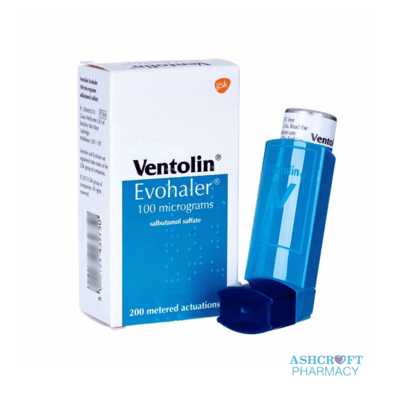
The Ventolin Evohaler, in contrast, is a metered-dose inhaler (MDI) that uses an HFA propellant to deliver the medication.
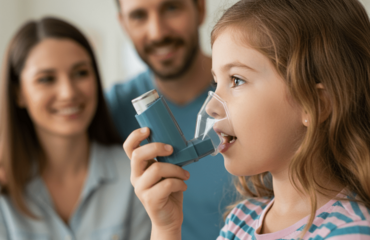
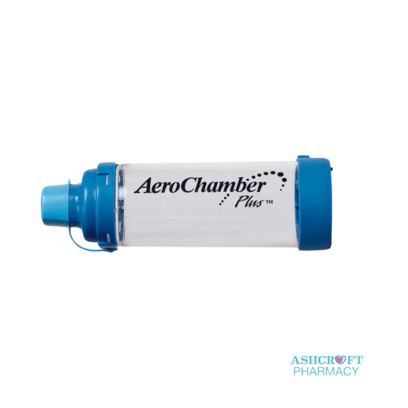
Coordinated breathing is essential for this device; patients must press the canister while inhaling deeply and slowly. Some patients, particularly children, may find it easier to inhale the full dose using a spacer device attached to the Evohaler.
A Ventolin Evohaler contains 100 micrograms of its active ingredient, Salbutamol, with each puff. The inhaler delivers a fine mist that you inhale.
Unlike the Accuhaler, the Evohaler is compact and portable. However, it typically lacks a dose counter, so users must monitor how many doses remain in the device to avoid an unexpected shortage.
Ventolin (salbutamol) | Asthma Inhaler
Aerochamber Plus Spacer

Receive Tomorrow if you place order in next
How Does A Ventolin Inhaler Work?
A Ventolin inhaler administers Salbutamol, which is a beta-2 agonist, directly into the lungs, where it acts on the beta-2 adrenergic receptors of the airway smooth muscle. Activating these receptors relaxes the airway muscles, leading to bronchodilation (a widening of the airways that helps air flow more freely).
It eases symptoms such as shortness of breath, chest tightness, and wheezing, which are often caused by asthma or other conditions such as COPD (Chronic Obstructive Pulmonary Disease). The duration of this relief is usually between 5 and 15 minutes, with effects lasting approximately 4 hours.
Most patients use a peak flow meter to assess their lung function in relation to the Ventolin doses and to determine when Ventolin is needed for symptom control.
How to Use a Ventolin Inhaler Safely?
To ensure adequate delivery of medication to your lungs, it is vital to use your Ventolin inhaler correctly. Poor inhaler technique reduces the drug’s effectiveness and leads to uncontrolled symptoms. Below are instructions for both types of devices, the Ventolin Evohaler (MDI) and the Ventolin Accuhaler (DPI):
Ventolin Evohaler (Metered-Dose Inhaler)
- Before use, shake the inhaler well.
- Remove the cap and examine the mouthpiece for debris.
- Exhale entirely, away from the inhaler.
- Place the mouthpiece in your mouth and make a tight seal with your lips.
- Breathe in steadily and deeply through your mouth while pressing the canister down firmly to release one puff. Continue breathing in slowly and deeply.
- Remove the inhaler from your mouth and hold your breath for 10 seconds, or as long as comfortable.
- If you need a second dose, wait 30 seconds and repeat steps 3-6.
If you struggle with coordination, ask your doctor or pharmacist about using a spacer device. This can improve delivery to the lungs.
- Tip: Release a test spray into the air to prime the inhaler if it is new or has not been used for five days or more.
Ventolin Accuhaler (Dry Powder Inhaler)
- Open the Accuhaler: Hold the outer case in one hand and place the thumb of your other hand on the thumb grip. Push your thumb away from you as far as it will go until you hear a click. This opens a small hole in the mouthpiece.
- Load the Dose: Hold the inhaler with the mouthpiece towards you. Slide the lever away from you as far as it will go, until it clicks. This places a single dose of medicine into the mouthpiece.
- Exhale entirely, away from the device.
- Inhale the Dose: Place the mouthpiece firmly in your mouth and inhale steadily and deeply.
- Hold Your Breath: Remove the inhaler and hold your breath for about 10 seconds, or as long as comfortable, then exhale slowly.
- Close the Accuhaler: Slide the thumb grip back towards you until it stops. The device will click shut. Store it safely.
Important: Every time the lever is pushed back, a dose is loaded. Avoid playing with the lever or moving it unnecessarily.
Additional Safety Tips
- Check your dose counter regularly to avoid running out unexpectedly.
- Store your inhaler in a cool, dry place, away from direct heat and humidity.
- For the Ventolin Accuhaler, ensure you can inhale strongly enough (check with your doctor if unsure).
The right technique while using the inhaler makes a big difference. So, consult your doctor about a demonstration or review of your technique to avoid adverse effects.
Aerochamber Plus Spacer
Ventolin (salbutamol) | Asthma Inhaler
Receive Tomorrow if you place order in next
Use of Ventolin Inhaler in Pregnancy
The FDA classifies Ventolin (Salbutamol) as a Pregnancy Category C drug, meaning there are potential risks to the fetus as seen in animal studies. However, there are no well-controlled studies in pregnant women. Despite this, doctors often prescribe Ventolin during pregnancy if the benefits are judged to outweigh the potential risks.
However, uncontrolled asthma itself poses greater risks to both mother and baby, such as preterm labour, reduced oxygen supply, and low birth weight, so maintaining reasonable asthma control is crucial.
Some observational studies have not shown a clear linkage between salbutamol use and significant congenital disabilities, and UK guidelines generally support its use under medical supervision. Pregnant women should always consult with their GP or specialist regarding their personal risk and treatment plan.
Use of Ventolin Inhaler in Children
Ventolin is often prescribed for children aged 2 years and older to manage asthma and relieve acute episodes of airway obstruction.
It is safe and effective when used appropriately and under medical supervision. The recommended paediatric dosing is 1 to 2 puffs every 4 to 6 hours as needed, though a physician should determine the precise dose and frequency of administration.
For younger children, a spacer device with a face mask is often recommended to ensure adequate delivery of the medicine into the lungs.
Caregivers and parents must be trained in appropriate inhaler techniques and diligent in monitoring the child's symptoms and response, including using a peak flow meter if instructed by a physician.
Ventolin Inhaler Side Effects
Although well-tolerated, Ventolin comes with some side effects such as:
Common Side Effects
- Headache
- Tremors (shaking)
- Throat irritation
- Palpitations (feeling your heart beat rapidly or irregularly)
These effects are usually mild and temporary. If they persist or worsen, consult your doctor.
Serious Side Effects
- Arrhythmias (irregular heart rhythms)
- Hypokalemia (low potassium levels, with signs such as cramps, muscle weakness, or arrhythmias)
- Paradoxical bronchospasm (sudden worsening of breathing immediately after using the inhaler)
- Anaphylaxis (severe allergic reaction)
- Lactic acidosis
If you notice any of these side effects, seek emergency medical help immediately.
Ventolin (salbutamol) | Asthma Inhaler
Aerochamber Plus Spacer
Receive Tomorrow if you place order in next
Warnings
Precautions
Warning and precautions.
- Always tell your doctor if you are taking other asthma medicines or any other medications.
- Always consult your doctor if you are pregnant, breastfeeding, or planning to get pregnant.
- Only use your Ventolin inhaler when your symptoms require it, not on a regular schedule (unless your doctor advises otherwise).
- Do not use a Ventolin inhaler if you are allergic to salbutamol or any other ingredients.
- It is recommended to consult your doctor before using any inhaler, even if available over the counter.
- Do not use a Ventolin inhaler if you are at risk of premature labour or threatened miscarriage.
- Ventolin does not typically affect driving or using machines, but be aware of potential side effects, such as dizziness.
- It is okay to use the inhaler with or without food.
- Always talk to your doctor if you have severe or worsening asthma.
Who shouldn't take Ventolin?
You should always consult your doctor before using a Ventolin inhaler if you have:
- High blood pressure
- Heart problems
- An overactive thyroid gland (hyperthyroidism)
- Are you taking steroid tablets or inhalers for asthma
- Diabetes (Salbutamol can increase blood sugar levels)
- Galactose intolerance (check specific product information)
Frequently Asked Questions
What happens if I overdose?
If you take too much Ventolin, it can lead to tachycardia (fast heart rate), severe tremors, chest pain, or, in rare cases, lactic acidosis. It can also cause dizziness and arrhythmias (irregular heart rhythms). In case of an overdose, seek emergency medical help immediately.
Should you drink water after using a Ventolin inhaler?
Drinking water after using a Ventolin inhaler is not necessary, but rinsing your mouth with water and spitting it out afterwards is recommended, especially with steroid inhalers (though not essential for Ventolin). This can help reduce the risk of throat irritation or dryness. Drinking water afterwards is excellent.
What should I avoid while using Ventolin?
While using Ventolin, it may be sensible to avoid excessive stimulants like caffeine, as they could potentially worsen side effects such as palpitations or tremors in sensitive individuals. Also, try to avoid known asthma triggers like allergens or smoke, as these can trigger bronchospasms.
What happens if you use an inhaler without asthma?
Using a Ventolin inhaler without asthma or another condition requiring it can result in side effects such as an increased heart rate, headaches, or shakiness, without providing any medical benefit. Unnecessary or high doses may lead to side effects like low potassium levels (hypokalaemia) or heart rhythm issues.
What should I do if the Ventolin inhaler is not working for me?
If your Ventolin inhaler is not relieving your symptoms effectively, or if you need to use it more often than usual, you should consult your doctor as soon as possible to review your treatment plan.
How long should I use my inhaler?
Ventolin is a 'reliever' inhaler used as needed to treat sudden asthma symptoms or flare-ups. It is not typically used daily unless your doctor advises it explicitly to prevent exercise-induced symptoms.
What are the advantages of buying Ventolin inhalers online?
Buying Ventolin inhalers online from a regulated pharmacy offers convenience, potentially faster delivery, competitive prices, and access to patient information resources.
What happens if I stop using an inhaler?
If you have asthma, attacks can happen unexpectedly. It is essential always to carry your reliever inhaler (such as Ventolin) to treat sudden symptoms promptly. Do not stop any prescribed inhaler without consulting your doctor.
Is it safe to buy inhalers online?
Yes, it is safe to buy inhalers online, provided you use a legitimate, regulated UK pharmacy, such as Ashcroft Pharmacy, which requires appropriate checks (like an online consultation) before dispensing medication.
How do I buy Ventolin inhalers online?
Typically, you will need to complete an online assessment form that asks questions about your health and symptoms. A registered pharmacist or prescriber will review your responses to ensure the medication is suitable and safe for you before dispatching the inhaler.
More resources
Ventolin (salbutamol) | Asthma Inhaler
Aerochamber Plus Spacer
Receive Tomorrow if you place order in next