POSTPONEMENT OF MENSTRUATION
By Mr Suhail Jamil



Sometimes special events like holidays, weddings, or sports competitions do not always match up with your menstrual cycle. Whether you already take the pill or are thinking about other options, you can manage your menstrual cycle without much fuss. In the UK many people take contraceptive pills or use other hormonal methods to delay their period when they need to. But how does this work, and which option suits you best? This post will explain the different methods, how to use them, and what you should think about before changing your routine.
How Does Hormonal Birth Control Affect Your Menstrual Cycle?
Oral contraceptives affect your menstrual cycle due to the presence of synthetic hormones—oestrogen and progesterone.
These pills affect ovulation In several ways:
- Suppress ovulation: they can prevent the release of an egg from the ovaries.
- Thickening the cervical mucus: this makes it harder for the sperm to travel and reach the egg, even if ovulation has already occurred.
- Thinning the uterus lining: this does not provide an adequate environment for a fertilised egg to implant, so it prevents fertilisation.
What contraception can delay periods?
The only licensed treatment for postponement of menstruation in the UK is a drug called Norethisterone. In order for it to be effective, Norethisterone must be taken 3 days before the expected period. It can be taken for 2-3 weeks maximum if necessary, and periods will return within 2-3 days of stopping this medication. It is important to note that norethisterone is not a contraceptive, and so another form of contraception should be used to avoid pregnancy.
Patients should be advised that the efficacy of this treatment can vary between individuals, as well as the return of the period after stopping this medicine.
How does Norethisterone work in your body?
Naturally, prior to having a menstrual bleed, the levels of progesterone fall allowing the lining of the womb to break down and cause a monthly withdrawal bleed. By taking Norethisterone, the progesterone level does not fall as Norethisterone is a synthetic progesterone hormone. By keeping the levels of this hormone higher, the lining of the womb does not shed. Once the tablet is stopped, the lining of the womb will shed and result in a menstrual bleed.
For women who are already taking some type of contraceptive:
Combined oral contraceptives: women using the combined oral contraceptive regularly already may be able to delay a period by taking their active pill daily without a break. This is called tailored pill taking and is usually done in agreement with a healthcare professional. However, this method is off-label and should be done under medical supervision. It does not suppress the period straight away and therefore is not reliable or licensed for short term needs.
Tailored pill-taking methods include:
- Taking the pill every day without a break.
- Taking the pill every day for three weeks, but then having a four-day (rather than a seven-day) break. This may reduce the risk of pregnancy if you miss a pill.
- Taking three 21-day packs of pills one after the other, followed by a break of four or seven days.
- Taking pills continuously without a break until you have a 'breakthrough bleed' for three to four days, then taking a break of four or seven days before starting the next pack.
- Taking pills continuously, whether or not you have any bleeding.
Using the above methods for the combined contraceptive pill can result in not having a period, however it may not suppress the period straight away, and it can also cause irregular bleeding now and again. Therefore, it is not a recommended or a licensed method for postponing menstruation in the short term. Tailored methods are not licensed and should be discussed with a healthcare professional.
Moreover, some women cannot take the combined pill for safety reasons, this includes smokers aged over 35 and those who have a particular type of migraine called migraine with aura. This is because taking combined hormonal contraception in these circumstances gives an unacceptably high risk of blood clots.
Frequently Asked Questions
Why do people delay their period?
People delay their periods in the short term for various reasons, such as avoiding discomfort during travel, holidays, weddings, exams, or sports events.
Will delaying my period affect my fertility in the future?
Delaying your period using hormonal methods does not affect your future fertility. Your natural cycle returns to normal within a few weeks or months after you stop using the method.
But if you had irregular periods before you started birth control pills, it might take some time to regulate your cycle again.
What should I do if I experience breakthrough bleeding (spotting)?
Breakthrough bleeding (spotting) is common and usually harmless, especially in the first few months of starting hormonal contraception or hormone treatment.
What to do
- Keep taking your medication exactly as prescribed.
- Take doses at the same time each day.
- Track when the spotting happens and how long it lasts.
When it’s normal
- Within the first 3–6 months of starting treatment
- After missed or late doses
- During stress, illness, or stomach upset
When to seek advice
- Spotting lasts longer than 3 months
- Bleeding becomes heavy, painful, or frequent
- You have pelvic pain, unusual discharge, fever, or possible pregnancy
Are there long-term risks to frequently delaying my period?
Delaying your period with hormone-based birth control is safe for most women, but using it for a long time might increase the chances of experiencing side effects like unexpected bleeding or hormone issues.
Although serious problems such as blood clots do not happen often, some people are at higher risk. It is a good idea to check in with your doctor for personalized advice and regular check-ups.
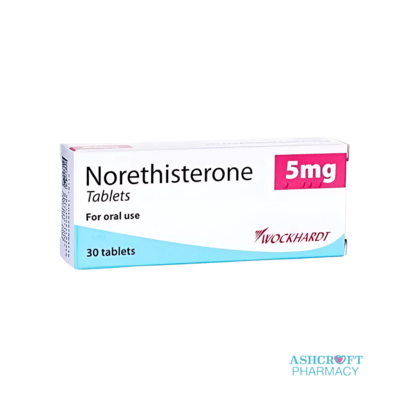
Norethisterone 5mg

Lovima 75mcg Film-Coated Tablets 28s

Order Monday to Friday before 14:00pm to guarantee next day delivery