• Free Standard Delivery Over £45
  • UK Registered Pharmacy
  • Discreet Delivery
  • Authentic & Safe Medication

Oral Thrush

Thrush refers to a fungal infection that occurs in the mouth of toddlers, older adults, and babies with a weak immune system. Rarely, it can also pass between babies and nursing parents. It is also known as oral candidiasis or oropharyngeal candidiasis. Scroll down to learn more about its symptoms, causes, treatment, and preventive strategies.

Info: Before issuing a treatment, you’ll need to answer a short assessment. This will help us recommend the right treatment for you.

Oral Thrush medications
Order in the next for Thursday delivery


Overview

Buy oral thrush treatment online UK

If you want to buy oral thrush treatment online, buy it via our UK-registered online pharmacy, i.e. Ashcroft Pharmacy. Just fill out an online consultation form, and our pharmacists will evaluate whether you are eligible for this treatment.

Once approved, we will dispatch your order to your doorstep through our fast, discreet delivery process.

Diagnosis of oral thrush

Your doctor can diagnose oral thrush by:

  • Asking about the history of your symptoms
  • Examining your mouth for lesions 
  • Doing a biopsy of the affected area to confirm the diagnosis 
  • Examining mouth scraping under a microscope
  • Doing a throat swab culture or endoscopy to see whether the fungal infection is limited to your mouth or has spread to your throat, oesophagus, or digestive tract.  
  • Talking X-rays of your oesophagus 

After these procedures or confirming the diagnosis of oral thrush, your doctor may ask you to get blood tests to evaluate the underlying condition that is causing the oral thrush. 

Best oral thrush treatment in the UK

The goal of oral thrush treatment is to stop the growth of the fungus. Oral thrush is easy to treat in adults and healthy children. It becomes harder to treat people with a weak immune system. Its treatment options include:

Treatment for oral thrush in adults

The doctor prescribes antifungal medications in the form of ointment, lozenges, tablets, gels, or antifungal mouthwash for 7-14 days. These include:

Topical antifungals are used several times a day, while tablets or capsules are taken once daily.

These medications usually do not have any side effects, but sometimes they cause mild effects in some people, such as bloating, vomiting, nauseadiarrhoeaea, or abdominal pain. 

Some important tips

If you develop thrush after taking antibiotics, eating yoghurt with live cultures or taking probiotic supplements such as acidophilus may help restore healthy bacteria, but you may still need antifungal treatment if symptoms persist. Consult your pharmacist or doctor if you develop symptoms.

Treatment for oral thrush in babies & nursing parents

The effective oral thrush treatment approach for babies and nursing parents includes:

  • Treat your baby with antifungal medications, prescribed by your doctor.
  • Apply antifungal cream to your breast. Wipe off the cream before nursing. 
  • Keep your nipple dry and clean between feedings. If you use nursing pads, avoid them as they can trap moisture and offer favourable conditions for fungal growth.
  • Sterilise your baby’s pacifiers, breast pump pieces, teething rings, bottle nipples, and any other item your baby puts in his/her mouth.
What is thrush?

Oral thrush is a condition in which the fungus Candida albicans builds up in your mouth. Naturally, a small amount of candida, a yeast, lives in your mouth and digestive tract, but sometimes it multiplies rapidly, causing symptoms of a yeast infection.

Usually, it causes creamy white patches or spots on the tongue or inner cheeks, but sometimes, it may spread to the roof of the mouth, tonsils, gums, or back of your throat.

Candida or yeast is also linked to diaper rash and vaginal yeast infection in women. Oral thrush is harmless if you are healthy; however, if you have a weak immune system, it can become more serious and harder to control.

https://www.ncbi.nlm.nih.gov/books/NBK545282/ 

Is thrush contagious?

Oral thrush is usually not contagious in healthy adults, but Candida (the yeast that causes it) can spread in certain situations, such as:

  • Kissing someone with an active oral yeast infection
  • Sharing personal items like toothbrushes
  • Coming into contact with yeast infections in other parts of the body
  • Chestfeeding or breastfeeding if your baby has oral thrush
  • Chestfeeding or breastfeeding if you have a yeast infection on the nipples or in the breast tissue
  • Engaging in vaginal, anal, or oral sex when a yeast infection is present

So, to avoid the risk of getting thrush from another person, wash your hands every time you make contact with someone’s items or utensils. 

Thrush in pregnancy

During pregnancy, hormonal changes, especially increased levels of estrogen, can make yeast infections more likely. This most commonly affects the vagina, but in some cases, oral thrush can also occur.

If you develop oral thrush, your doctor may prescribe antifungal treatments such as nystatin oral suspension or miconazole oral gel. If symptoms persist or worsen, consult your doctor for further advice and treatment.

What should I eat with oral thrush?

Diet tips for oral thrush:

  • Eat soft, non-acidic foods to reduce discomfort, such as bananas, pears, cooked vegetables, whole grains, and lean proteins like fish or chicken.
  • Probiotic foods or supplements may support recovery by helping restore healthy oral and gut bacteria, but they don’t replace antifungal treatment.
  • Avoid overly sugary, acidic, or spicy foods while symptoms are present, as these can worsen irritation.

Avoid alcohol, spicy or acidic foods, and sugary beverages as they can worsen your condition. Stay well hydrated and drink herbal teas to soothe irritation. However, more research on this area is needed. 

Risk factors for oral thrush

Oral thrush is an opportunistic infection, and certain factors enhance the risk of getting it, such as:

  • Dry mouth (xerostomia)
  • Uncontrolled diabetes 
  • Cancers and cancer treatment, such as radiation therapy or chemotherapy
  • HIV/AIDs, organ transplant recipients and other conditions that weaken the immune system
  • Young children, newborns, and adults over 65
  • People with underlying health conditions such as an underactive thyroid, iron deficiency anaemia, vitamin B12 deficiency, and malnutrition  
  • Young children, babies under 1 month, and elderly people aged 65 or over
  • People with underlying health conditions such as underactive thyroid, iron deficiency, or vitamin B12 deficiency 
  • Taking certain medications such as immunosuppressants, antibiotics, diuretics, antihistamines, or corticosteroids 
  • Pregnancy 
  • Smoking
  • Ill-fitting dentures

These conditions weaken your immune system, disturb the natural balance of microorganisms in your body, and offer a favourable environment for the growth of Candida albicans. 

When to see a doctor?

You must visit your doctor if:

  • You get any symptoms of oral thrush, such as white patches or spots
  • You are already taking antifungals, but symptoms do not improve or recur
  • You have thrush symptoms along with underlying medical conditions such as HIV, diabetes, or others. 

Besides this, if your child has an oral thrush, you must seek medical help if:

  • The child is dehydrated
  • Have a dry mouth and dark urine
  • Have not urinated in more than 8 hours
  • Looking very sick
  • Have bleeding sores in the mouth
How to prevent oral thrush?

You can reduce the risk of oral thrush by considering the following points:

  • Do not share utensils and cups with others who have symptoms of oral thrush
  • Practice good oral hygiene by flossing daily and brushing your teeth 2 times a day. Visit your dentist on a regular basis. 
  • Eat a well-balanced and nutritious diet to support the functioning of your immune system. 
  • If you have dentures, remove them before going to bed, clean them daily, and ensure they fit properly. 
  • If you are using a corticosteroid inhaler, rinse your mouth or brush your teeth after using it.
  • If you have diabetes, ensure that to manage your blood sugar levels effectively. 
  • If you smoke, stop smoking. Avoid vaping or tobacco products. 
  • Drink plenty of water and stay well-hydrated.
  • Avoid sugary foods
Takeaway points:

Oral thrush is a fungal infection that affects your throat, mouth, and oesophagus. It mostly affects babies, but it can also affect adults.

Timely intervention with home remedies and antifungal medications can treat oral thrush within 1-2 weeks; however, if left untreated, thrush can spread to other parts of your body and cause serious complications. 

So, once you get any symptoms of oral thrush, consult your doctor immediately to avoid further effects.

Sources

https://www.healthline.com/health/thrush

https://www.nhsinform.scot/illnesses-and-conditions/infections-and-poisoning/oral-thrush-in-adults/#:~:text=Oral

https://www.mayoclinic.org/diseases-conditions/oral-thrush/diagnosis-treatment/drc-20353539

https://my.clevelandclinic.org/health/diseases/10956-thrush

Causes

What causes oral thrush in adults?

Oral thrush is caused by the overgrowth of Candida albicans, which is naturally a part of your microbiome. The reasons that disturb the balance of good and bad microbiome and cause this fungus to multiply rapidly may include:

  • Taking antibiotics for a long period or at a high dose.
  • Having poor oral hygiene
  • Smoking
  • Wearing dentures (false teeth) that do not fit well
  • Taking inhaled corticosteroid medicines for asthma and chronic obstructive pulmonary disorder (COPD)
  • Taking birth control pills
  • Having radiotherapy or chemotherapy to treat cancer
  • Having a dry mouth due to medications or medical conditions

Resources

https://www.ncbi.nlm.nih.gov/pmc/articles/PMC7912069/ 


Symptoms

What are the symptoms of oral thrush?

In the early stages, oral thrush (mouth thrush) is asymptomatic, making it difficult to identify. But when it becomes worse, it shows the following symptoms:

  • Oral thrush symptoms in adults
  • Soreness, redness, pain, or burning in the mouth
  • Bleeding from scraping spots
  • White or yellow spots on your tongue, gums, inner cheeks, tonsils, or lips 
  • Difficulty swallowing or drinking
  • Bad taste in your mouth
  • Cotton-like sensation in your mouth
  • Loss of sense of taste (ageusia)
  • Dry, cracked skin at the corners of your mouth
  • Irritation, redness, and pain under dentures
  • Median rhomboid glossitis (A large red, painless mark in the centre of your tongue)
  • Linear gingival erythema (gum irritation or inflammation)
  • Plaque-like candidiasis (hyperplastic) that shows up as a solid, white plaque on your mouth and tongue that cannot be wiped off. It is not common and mostly affects people with HIV.

Sometimes, oral thrush can affect your oesophagus, called Candida esophagitis, and cause fever, painful swallowing, and a feeling that food is stuck in your throat or mid-chest area. Also, the same fungus that causes oral thrush can cause yeast infections in other parts of your body.

Symptoms in babies and breastfeeding mothers

About 65% of infants and 5-7% of babies under one month have oral thrush with the following symptoms such as:

  • Sore mouth
  • Difficulty feeding
  • Irritability or fussiness 
  • White coating on the tongue that looks like cottage cheese

Babies get this fungal infection from their birth parents during pregnancy, delivery, or nursing, as the infection can pass between the mother’s nipples and the baby’s mouth. 

Breastfeeding women with candida may have these symptoms such as:

  • Unusual red, sensitive, itchy, or cracked nipples
  • Stabbing pains deep within the breast
  • Shiny or flaky skin on the circular, darker area around the nipples, called the areola
  • Unusual pain during nursing 

https://www.ncbi.nlm.nih.gov/books/NBK545282/#article-30115.s12 

FAQ

  • Oral thrush home remedies: How to avoid thrush?

    Home remedies and supportive care for oral thrush:

    • Practice good oral hygiene: Brush your teeth twice a day, floss daily, and replace your toothbrush regularly.
    • Disinfect dentures: Clean dentures daily and remove them at night.
    • Salt water rinse: Dissolve ½ teaspoon of salt in a cup of warm water, swish gently, and spit it out to soothe irritation.
    • Probiotics: Eat unsweetened yoghurt or take probiotic supplements to help restore healthy oral bacteria.
    • Stay hydrated and eat soft, non-acidic foods to reduce discomfort.
    • Use caution with home remedies like clove oil, oregano oil, lemon, turmeric, or apple cider vinegar, as these may irritate your mouth and damage the enamel of your teeth. Always follow your doctor’s advice and complete any prescribed antifungal treatment. 
    • Use nursing pads: If you are breastfeeding and have a fungal infection, use pads without a plastic barrier to help prevent the fungus from spreading to your clothes. Wear a clean bra every day.
    • Use baking soda (sodium bicarbonate): Dissolve ½ teaspoon of baking soda in 1 cup of warm water. Swish it in your mouth and spit it out. It acts as a disinfectant for C. albicans.

  • What is the fastest way to get rid of oral thrush?/Can I treat oral thrush on my own?

    You can treat oral thrush on your own and get rid of it quickly by using antifungal medications such as fluconazole, clotrimazole, or nystatin. Also, avoid sugary foods, maintain good oral hygiene, and rinse your mouth with a baking soda or salt solution to alleviate symptoms.

  • What mouthwash kills thrush?

    Nystatin antifungal mouthwash is effective against oral thrush, caused by Candida fungi. Swish it in the mouth for several seconds and swallow or spit it out as directed by the doctor.  

  • What is the best antifungal for oral thrush?

    The best treatment for oral thrush is fluconazole, clotrimazole lozenges, and nystatin mouthwash for mild cases. For severe cases, stronger antifungals such as itraconazole can be used.

  • Can a pharmacist diagnose oral thrush in the UK?

    Pharmacists can diagnose oral thrush in the UK by recognising its symptoms and can provide advice and OTC treatment. However, they cannot confirm the diagnosis; only a doctor or dentist can offer a formal diagnosis.

  • Drinks during oral thrush:

    • Drink plenty of water to stay hydrated.
    • Probiotic drinks (unsweetened yoghurt smoothies or kefir) may support healthy bacteria, but they do not replace antifungal treatment.
    • Avoid sugary drinks, soda, or sweetened juices, as they may worsen the infection.
    • Avoid acidic drinks like undiluted lemon juice or apple cider vinegar rinses, as they can irritate the mouth.

    Fruits during oral thrush:

    • Prefer low-sugar fruits such as apples, pears, and unsweetened berries.
    • Avoid very sugary fruits or excessive fruit juice, as sugar can encourage yeast growth.
    • Acidic fruits like lemons or oranges may irritate the mouth if thrush is present; consume with caution.
    • Fruits do not cure thrush; antifungal treatment is still required.

  • Can oral thrush be cured?

    Oral thrush can be cured with proper treatment, such as using antifungal medications like nystatin or fluconazole. Prevent recurrence by maintaining good oral hygiene and managing underlying medical conditions. 

  • How long does oral thrush last?/How long does oral thrush treatment take?

    Oral thrush lasts for 7-14 days with proper treatment such as fluconazole or nystatin. Without treatment, it may persist for months or longer (chronic), especially in people with weakened immune systems.

  • What is the over-the-counter oral thrush treatment?

    Over-the-counter oral thrush treatment includes antifungal lozenges, gels, and mouthwashes. The medications may include fluconazole, miconazole, clotrimazole, or nystatin.

    Probiotic supplements may also help you manage symptoms. If the infection persists, consult your doctor for better advice.

Nystan (Nystatin) Oral Suspension - 30ml

Medication Ashcroft Pharmacy
100,000u/1m x1 x 30ml bottle £19.99
Order now
100,000u/1m x2 x 30ml bottle £39.98
Order now

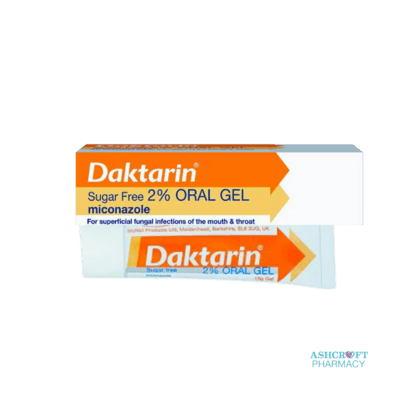
Daktarin 2% Oral Gel

Medication Ashcroft Pharmacy
2% x1 x 15g £8.99
Order now

Hear from our customers...

Loading reviews...

Ordering is quick and easy!

  • Step 1:  Select the Treatment You’d Like

    Step 1:
    Select the Treatment You’d Like

    Our medical team will check it’s safe and suitable for you.

  • Step 2: Free Online Consultation

    Step 2:
    Free Online Consultation

    Start a free 2 minutes online consultation with simple questions about your health.

  • Step 3: Express Delivery

    Step 3:
    Express Delivery

    Your treatment will be sent direct from our pharmacy in discreet packaging.